
Can Ballroom Dancing Improve Your Balance? What Beginners Should Know
Have you ever watched a ballroom dancer glide across the floor and wondered how they make every movement look so effortless?
Behind those smooth movements are balance, coordination, body awareness, and practice. Whether you are learning Waltz, Rumba, Foxtrot, or Swing, ballroom dancing challenges you to control your body as you move.
For beginners, these skills take time to develop. The good news is that you do not have to arrive at your first lesson with perfect balance or coordination.
At EdanSe Ballroom, we help students build their skills gradually, starting with the fundamentals of movement and weight transfer.
How Does Ballroom Dancing Challenge Your Balance?
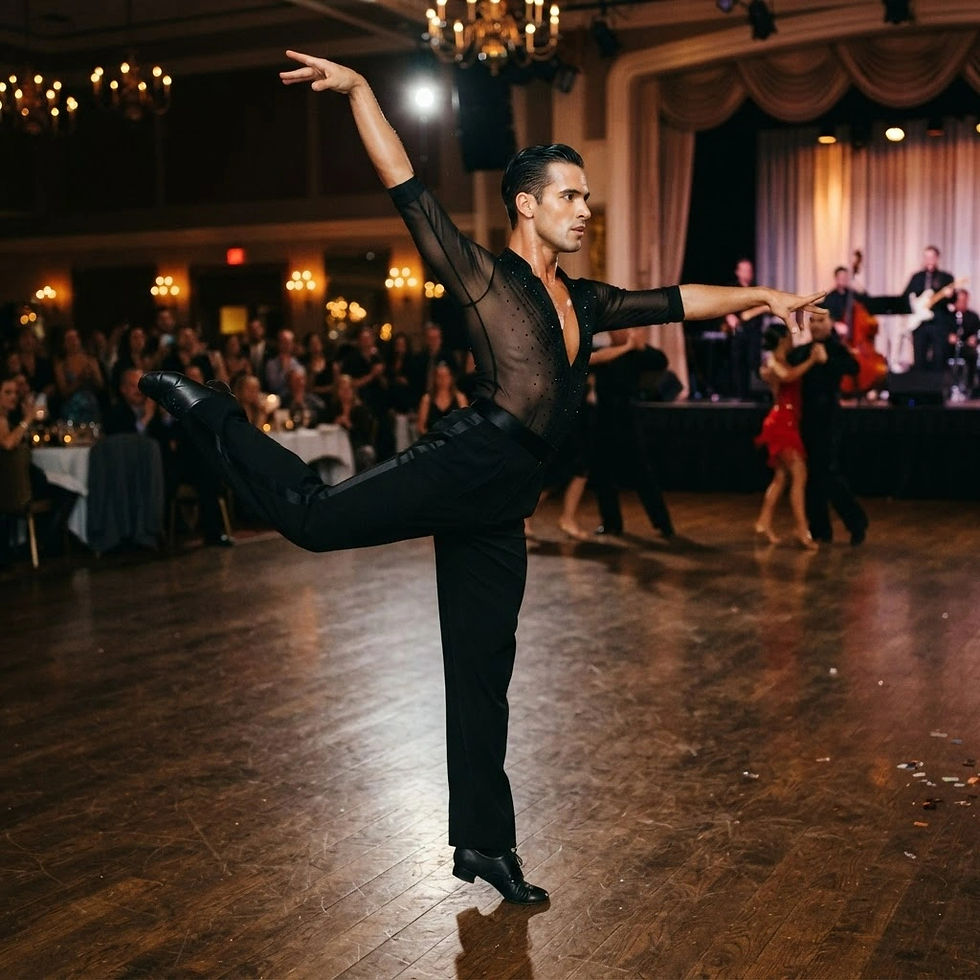
Balance is your ability to maintain control of your body while standing still or moving. Dancing challenges this ability in several ways.
1. Learning to Transfer Your Weight
Many beginners initially focus on where to put their feet. However, effective dancing also requires learning how to transfer your weight from one foot to the other.
In Rumba, for example, you practice controlled weight changes and learn to settle your weight over a supporting leg. In Waltz, you learn to move smoothly while maintaining control of your body.
These movements encourage you to become more aware of where your weight is positioned.
2. Moving in Different Directions
Walking forward is only one part of dancing. Depending on the dance, you may move backward, sideways, diagonally, or turn.
Practicing these changes of direction challenges your coordination and ability to adjust your movement.
3. Coordinating With a Partner
Partner dancing adds another dimension. You learn to maintain your own balance while responding to another person's movement.
Good partner dancing does not mean leaning heavily on your partner for support. Instead, each person develops their own balance while learning to coordinate their movements together.
What Does Research Say About Dancing and Balance?
Research suggests that dance-based activities can improve some aspects of physical function.
A 2020 systematic review and meta-analysis published in JAMA Network Open examined 29 randomized clinical trials involving healthy older adults. The researchers found that dance-based mind-motor activities were associated with improvements in balance, mobility, and lower-body strength.
However, not every study of dancing has found the same results. A 2024 systematic review in Age and Ageing, which included 41 studies and 2,451 participants, concluded that the evidence was too uncertain to establish that dance reliably prevents falls.
The distinction matters: research supports the potential for dancing to improve balance-related abilities, but dancing should not be presented as a guaranteed way to prevent falls.
A Real Example From My Experience as an Instructor
I once taught a student who struggled with balance following an accident. Over time, the improvement I witnessed was incredible.
Seeing the student's progress reinforced the importance of patience, repetition, and working on movements at an appropriate pace.
Rather than expecting immediate results, we focused on developing the skills needed to move with greater control. Watching the improvement over time was a powerful reminder that progress can happen gradually and that every student's journey is different.
This is one student's experience, not a guarantee that dancing will produce the same results for everyone. Anyone recovering from an accident should follow their healthcare professional's advice about appropriate activity.
Can Ballroom Dancing Help Older Adults?

Dancing can be an enjoyable way for older adults to practice coordinated movement and remain physically active.
The steps involve weight transfers, changes in direction, walking patterns, and maintaining posture. These movements can challenge physical skills used in everyday activities.
However, people with significant balance difficulties or a history of falls may need a more individualized approach. A healthcare professional or physical therapist can help determine whether dance lessons are appropriate and whether additional balance exercises are needed.
How Can Beginners Start Improving Their Balance?
You do not need to master complicated turns or fast footwork to begin.
A few useful principles include:
Start with simple steps and practice them consistently.
Wear secure footwear appropriate for the dance floor.
Focus on controlled weight transfers rather than taking larger steps.
Avoid rushing movements before you feel comfortable.
Tell your instructor about any injuries or movement limitations.
A qualified instructor can adapt the pace and complexity of your lessons to your abilities.
Take Your First Step at EdanSe Ballroom
Improving balance and coordination takes practice, but learning to dance can make that practice enjoyable.
At EdanSe Ballroom, beginners can learn the fundamentals in a supportive environment, whether they are interested in Waltz, Rumba, Foxtrot, Swing, or other ballroom and Latin dances.
Interested in trying a lesson? Contact EdanSe Ballroom in the Enfield, Connecticut, area to learn about private lessons and beginner classes.


Comments