
Does Ballroom Dancing Build Muscle? The Physical Work Behind the Steps
When people think about ballroom dancing, they often picture elegant movements, beautiful music, and couples gliding across the dance floor. What they may not realize is how much physical work goes into every step!
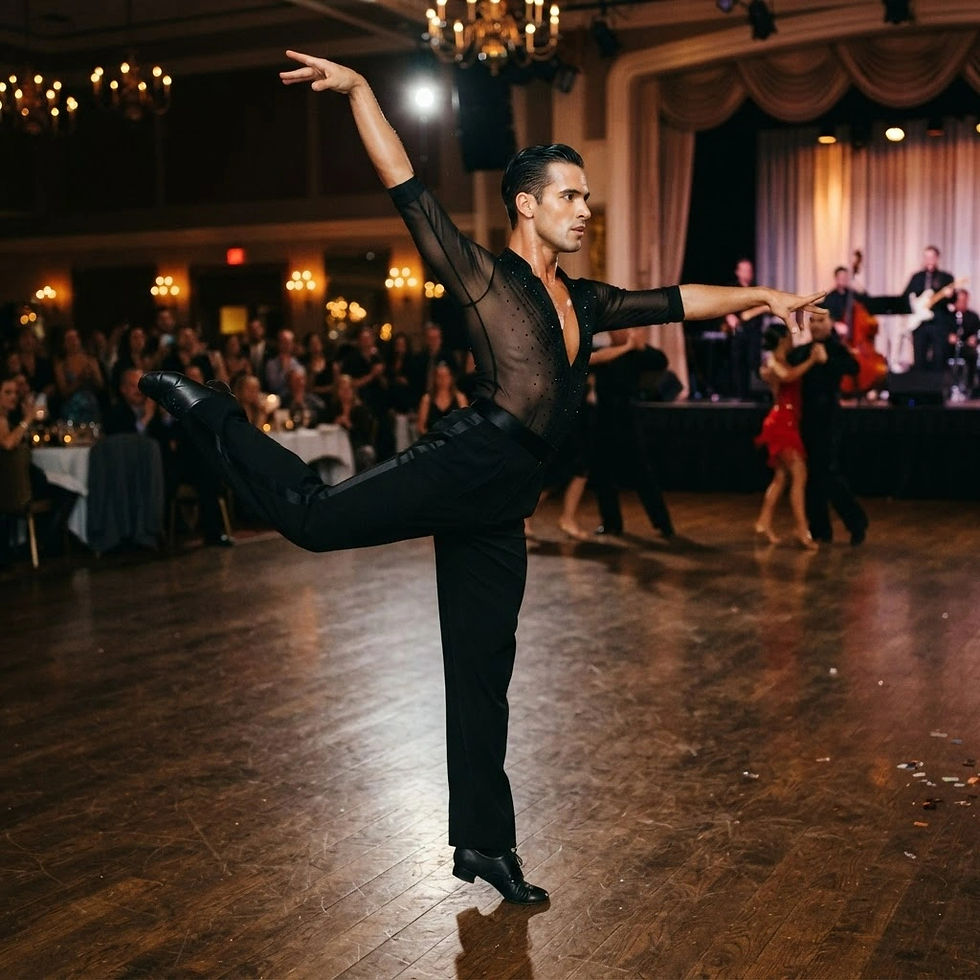
Ballroom and Latin dancing engage many different muscle groups while helping dancers develop coordination, endurance, and body awareness. Whether you are learning the Foxtrot, Rumba, Swing, or Cha Cha, you are doing more than learning dance steps. You are giving your body an opportunity to become stronger and more coordinated.
If you are looking for an enjoyable way to stay active, ballroom dancing can be a fun addition to your fitness routine.
1. Ballroom Dancing Engages Your Leg Muscles

Your legs do much of the work when you dance. Walking steps, changes of direction, turns, and controlled weight transfers all require your lower body to work together.
Different dances challenge your legs in different ways. For example:
Foxtrot: Encourages controlled walking, smooth weight transfers, and steady movement.
Rumba: Emphasizes balance, controlled weight changes, and deliberate leg action.
Swing: Often includes more energetic footwork and repeated changes of direction.
Cha Cha: Challenges your coordination through rhythmic footwork and quick weight changes.
As you practice, your legs become more familiar with the movements and the physical demands of dancing.
2. Dancing Uses Your Core Muscles
Your core muscles help stabilize your body while you move. In ballroom dancing, your torso must remain controlled as your legs travel, your partner connection changes, and you turn or rotate.
Developing better core control can help you maintain balance and move with greater confidence. Dancers also learn to coordinate their upper and lower bodies rather than moving every part of the body independently.
This takes practice, but it is one of the skills that makes dancing such an engaging physical activity.
3. Ballroom Dancing Builds Muscular Endurance
Muscle strength is not the only consideration. Muscular endurance—the ability to keep muscles working over time—is also important.
During a dance lesson, you may repeat the same pattern several times, practice a new sequence, and then dance through an entire song. Your legs, core, and postural muscles must continue working throughout these activities.
As your stamina improves, you may find that you can dance for longer periods without feeling as tired.
The amount of strengthening you gain depends on the dances you practice, how intensely you dance, and how often you participate. Ballroom dancing is not a complete replacement for resistance training, which remains important for building and maintaining muscle strength.
4. Latin Dancing Challenges Your Whole Body

Latin dances such as Rumba, Cha Cha, Samba, and Jive can involve changes in rhythm, direction, and speed. They also require dancers to coordinate their feet, legs, hips, torso, and arms.
Learning these movements helps develop body awareness and coordination. The challenge is not simply moving quickly; it is learning to control your movements while staying connected to the music.
You do not need to master complicated choreography to benefit. Even basic steps require your body to learn new movement patterns.
5. You Can Start at Your Own Pace
One of the great things about ballroom dancing is that you do not need to be an athlete to begin.
At EdanSe Ballroom, beginners can start with basic steps and gradually build their skills. A private lesson allows an instructor to adjust the pace and movements to your current ability and goals.
As you become more comfortable, you can explore additional dances, longer routines, and more challenging patterns.
The bottom line: Ballroom dancing engages your legs, core, and postural muscles while helping develop muscular endurance and coordination. Although it should not replace every aspect of a balanced fitness routine, it can be an enjoyable way to move your body and stay active.
Ready to experience the physical benefits of dancing for yourself? Contact EdanSe Ballroom to learn about private lessons and beginner group classes.
Frequently Asked Questions
Does ballroom dancing tone your muscles?
Ballroom dancing repeatedly engages muscles throughout your body. It can help improve muscular endurance, but the degree of muscle development depends on your activity level, intensity, and overall fitness routine.
Which ballroom dance is the best workout?
It depends on your goals and how you dance. Faster dances such as Swing, Cha Cha, and Samba can be more aerobically demanding, while slower dances still challenge balance, coordination, and movement control.
Is ballroom dancing enough to build muscle?
Dancing can support muscular endurance and some aspects of strength, particularly for beginners. For more substantial strength development, health guidelines also recommend muscle-strengthening activities that target the major muscle groups.
Can beginners benefit from ballroom dancing?
Yes! Beginners can benefit from learning basic movements and gradually increasing their activity as their skills and comfort improve.


Comments