
Can Ballroom Dancing Improve Your Posture and Flexibility?
Have you ever noticed how ballroom dancers seem to stand taller and move with confidence? Good posture is an important part of ballroom dancing, but it is not something you have to master before your first lesson.
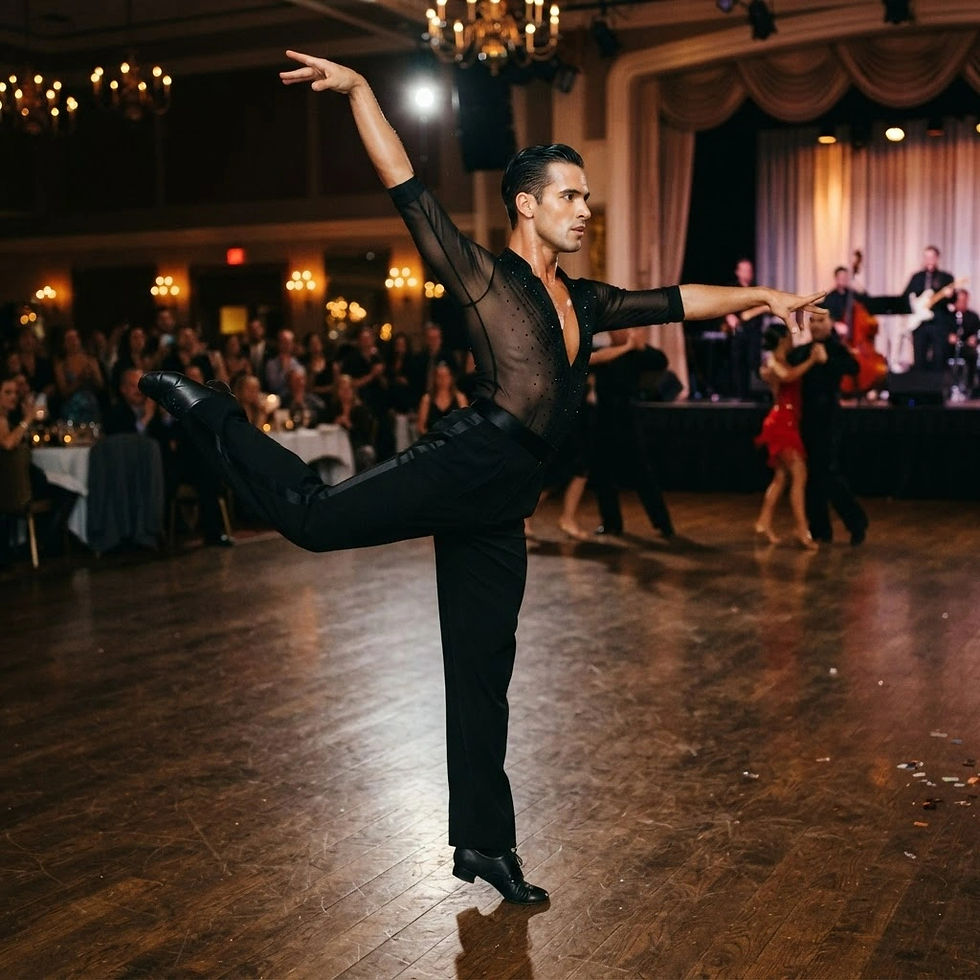
Ballroom and Latin dancing give you opportunities to practice standing upright, controlling your movements, and moving your body in new ways. Over time, these skills may help you become more aware of your posture, mobility, and flexibility.
Whether you are a complete beginner or returning to dance after years away, ballroom dancing can be a fun way to explore how your body moves.
1. Ballroom Dancing Teaches You Body Awareness
In ballroom dancing, posture is more than simply standing up straight. Dancers learn how to align their bodies, maintain balance, and move without unnecessary tension.
For example, in Foxtrot and Waltz, dancers practice maintaining a stable upper body while taking steps and traveling around the floor. In Latin dances such as Rumba and Cha Cha, dancers learn to coordinate their legs and hips while keeping their upper bodies controlled.
These skills encourage you to pay attention to how you stand and move.
As you practice, you may become more aware of habits such as slouching, leaning too far forward, or holding tension in your shoulders.
2. Dancing Encourages Better Postural Control

Good posture during dancing requires the coordinated use of several muscle groups, including the muscles that support your trunk and back.
You must maintain your balance while stepping, turning, and changing direction. You also need to adjust your position in relation to your partner.
These repeated experiences can help you practice postural control and body alignment. Some people may notice that they become more conscious of standing tall during everyday activities, too.
However, ballroom dancing does not guarantee that posture problems will disappear. Persistent pain or significant postural concerns should be discussed with a qualified healthcare professional.
3. Can Ballroom Dancing Improve Flexibility?
Flexibility refers to how far a joint or group of joints can move comfortably. Ballroom dancing includes movements that take your body through different ranges of motion.
Depending on the dance, you may practice:
Taking longer or shorter steps.
Rotating your torso in a controlled manner.
Moving your hips with the rhythm.
Extending your arms while maintaining a relaxed frame.
Shifting your weight smoothly from one foot to the other.
These movements encourage mobility and movement control. Some dancers may also experience improvements in flexibility as they practice consistently.
The results depend on the dances you learn, your starting mobility, and the
range of motion used during lessons. If improving flexibility is a specific goal, dedicated stretching and mobility exercises may also be helpful.
4. Different Dances Develop Different Movement Skills
One reason ballroom dancing is so interesting is that every dance has its own movement style.
Waltz and Foxtrot: These dances emphasize smooth travel, controlled steps, and maintaining balance while moving around the floor.
Rumba: Rumba focuses on deliberate weight changes, controlled movement, and coordinating the body with the music.
Cha Cha: This dance challenges coordination and rhythm through quicker footwork and changes of direction.
Swing: Swing can encourage agility, rhythmic movement, and coordination between partners.
Exploring different dances helps you discover new ways to move while developing a wider range of movement skills.
5. You Do Not Need to Be Flexible to Start Dancing

A common misconception is that you need natural rhythm, excellent posture, or a high level of flexibility before taking ballroom dance lessons.
That is not true.
Beginners start by learning basic steps, how to transfer their weight, and how to move comfortably to music. An instructor can help you work within your current abilities and gradually introduce new movements.
You do not have to perform dramatic stretches or complicated choreography to enjoy ballroom dancing. The goal is to learn safely, improve through practice, and enjoy the experience.
At EdanSe Ballroom, private lessons provide an opportunity to work on your individual goals, while group classes allow you to practice in a fun social environment.
The bottom line: Ballroom dancing can help you practice posture, balance, body awareness, and a variety of movements that support mobility. Results vary from person to person, but you can begin at your current ability and develop your skills over time.
Ready to stand a little taller and discover a new way to move? Contact EdanSe Ballroom to learn about beginner dance lessons.
Frequently Asked Questions
Can ballroom dancing fix bad posture?
Dancing can help you become more aware of your alignment and practice postural control. However, it cannot guarantee that a specific posture problem will be corrected.
Does ballroom dancing make you more flexible?
Regular dancing involves a variety of movements that may support mobility and flexibility. The results depend on your starting point, the dances you practice, and your consistency.
Which ballroom dance is best for posture?
Many ballroom dances encourage good posture. Waltz and Foxtrot emphasize maintaining an upright frame while moving, while Latin dances develop different aspects of body control and coordination.
Can older adults start ballroom dancing if they are stiff?
Many older adults can begin with simple steps adapted to their abilities. Anyone with significant pain, mobility limitations, or medical concerns should consult a healthcare professional before starting a new activity.


Comments