
Different Styles and Heel Heights of Ballroom Dance Shoes
If you're shopping for your first pair of ballroom dance shoes, you've probably noticed there are dozens of different styles and heel heights available. It can be overwhelming trying to decide which one is right for you.
The truth is, there isn't one "perfect" ballroom shoe. The best choice depends on your experience level, the styles of dance you're learning, and what feels most comfortable on your feet.
Here's a guide to the most common types of ballroom dance shoes and who they're best suited for.
Low-Heeled Ballroom Shoes

Low heels are often the best choice for beginners.
Typically ranging from 1 to 1½ inches, these shoes provide excellent stability while allowing dancers to become comfortable with proper footwork and balance.
Many new dancers feel more confident learning turns and basic movements in a lower heel because it offers a solid foundation without sacrificing style.
Low heels are also a great option for social dancers who spend several hours on the dance floor.
Mid-Heeled Ballroom Shoes
Mid-height heels, usually around 2 inches, are one of the most popular choices among recreational dancers. They offer a nice balance between stability and elegance while encouraging proper posture and leg action. Once dancers become comfortable with the basics, many choose this heel height because it works well for both lessons and social dancing.
High-Heeled Ballroom Shoes
Higher ballroom heels, generally 2½ to 3 inches, are commonly worn by experienced dancers and competitors. These shoes create longer leg lines, enhance body position, and can make certain Latin and Rhythm actions more pronounced. While they look beautiful, higher heels require greater balance, stronger ankles, and better technique. Beginners often find them more challenging, so it's usually best to work up to them over time.
Closed-Toe Ballroom Shoes
Closed-toe shoes are primarily worn for Ballroom Standard and Smooth dances such as:
Waltz
Foxtrot
Tango
Viennese Waltz
Quickstep
These shoes provide more coverage and support while creating the elegant appearance associated with traditional ballroom dancing.
They are available in several heel heights, making them suitable for beginners through advanced dancers.
Open-Toe Latin Shoes
Open-toe sandals are designed for Latin and Rhythm dances, including:
Cha Cha
Rumba
Samba
Salsa
Bachata
East Coast Swing
The open front allows greater flexibility through the foot and makes it easier to point your toes, creating the expressive look these dances are known for.
Many dancers eventually own more than one pair so they have shoes specifically designed for both ballroom and Latin styles.
Practice Shoes
Practice shoes are often overlooked but can be one of the smartest investments for regular dancers.
These shoes usually feature:
A lower, comfortable heel
Soft leather construction
Extra support
Closed-toe design
Cushioning for long practice sessions
If you take multiple lessons each week, practice shoes can help reduce foot fatigue while providing excellent versatility.
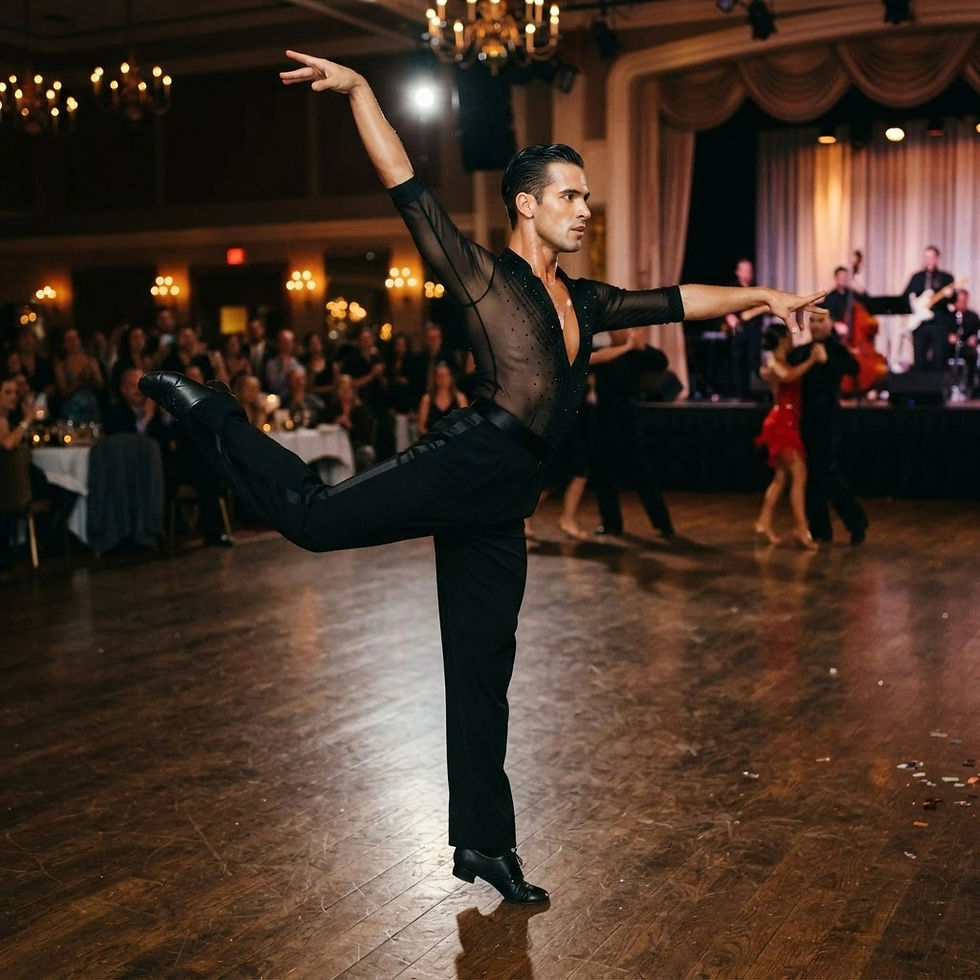
Men's Ballroom Shoes

Men also have several options depending on the dances they enjoy.
Most men's ballroom shoes feature:
A smooth leather upper
Suede soles for easy turning
Different heel heights depending on the style
Flexible construction for comfort
Standard ballroom shoes tend to have a more classic dress-shoe appearance, while Latin shoes often include a slightly higher heel and increased flexibility to encourage better foot action.
Which Shoe Should You Choose?
For most beginners, I recommend choosing comfort and stability over appearance.
You don't need the highest heel or the fanciest shoe to become a great dancer. The right shoe is one that allows you to move confidently and focus on learning rather than worrying about your feet.
As your technique improves, you may decide to try different heel heights or invest in separate shoes for Ballroom and Latin dancing.
Many experienced dancers eventually own several pairs because each serves a different purpose.
Final Thoughts
Ballroom dance shoes come in many styles, heel heights, and designs, each created to support different types of dancing and different stages of a dancer's journey.
Whether you choose a low-heeled beginner shoe, a comfortable practice shoe, or a high-heeled competition sandal, the goal is the same: to help you dance with confidence, comfort, and control.
If you're unsure which style is right for you, don't be afraid to ask an experienced dance professional. The right recommendation can make your first pair of ballroom shoes a purchase you'll enjoy for years to come.
Frequently Asked Questions:
What heel height is best for beginner ballroom dancers? A low heel (about 1 to 1½ inches) is typically the best choice because it offers the greatest stability while you learn.
Do I need different shoes for Ballroom and Latin dancing? Not at first. Many beginners start with one versatile pair. As you progress, you may benefit from having closed-toe shoes for Standard and Smooth dances and open-toe shoes for Latin and Rhythm.
Can I wear ballroom shoes for social dancing? Absolutely. Ballroom shoes are designed for lessons, social dances, and competitions, making them a great investment if you dance regularly.

Should I buy practice shoes or competition shoes first? If you're just starting out or take lessons regularly, practice shoes or a comfortable beginner ballroom shoe are usually the most practical first purchase. Competition shoes can come later as your skills and goals evolve.


Comments